


The Warehouse, 47-49 Cowleaze Road, Kingston Upon Thames, KT2 6DZ
+44 (0)208 541 3434

To charge for features, or not to charge? That is the question for software defined vehicles

Performance Communications Author Image Performance Communications | June 8, 2026

I enjoyed my first visit to FT Future of the Car summit last month, and it got me thinking. While Software Defined Vehicles (SDVs) and connected cars were a hot topic, communicating the benefits of these vehicles to consumers isn’t necessarily straightforward.

It’s especially hard when it feels like new tech is simply the enabler for car makers to charge motorists for features they’d ordinarily expect to be included in the price.

Features-Over-The Air (FOTA) sound great in practice but – even after BMW rowed back on its initial ambitions to charge a monthly subscription for features like heated seats following the decidedly cool reaction from media and consumers – there is uncertainty in the industry about how to implement them.

The real benefit is when owners get to experience fresh technologies and features that weren’t even available when they purchased their vehicle – or more pertinently in a world of second-hand cars – when it was first registered. In this way, FOTA has the potential to prolong the lives of cars and give consumers the opportunity to enjoy modern features in their existing vehicle. In this instance, it’s easy to see how manufacturers can justify charging their customers.

The other approach is where FOTA is used to charge new car buyers for features on a subscription basis – and this is where it gets harder for motorists to see the benefits.

Attitudes vary but President and CEO of Volvo Cars, Hakan Samuelsson, was clear in his mind about the way forward. Speaking at the summit, he said: ‘The first job is to make people want your car. Features should be included.’ He noted the exception of adding new features to older cars, but was unequivocal that asking people to pay extra for features will simply restrict access to them.

His view was echoed by Fedra Ribeiro, Executive VP, Executive VP, Member of the Board for ADAS & Compute at Bosch, who was part of a panel discussion about the future of SDVs. She highlighted the average net income across Europe of 28,000 Euros, and the fact cars are only used between two and five per cent of the time. To prove her point, she asked the audience to raise their hands if they had any paid-for apps on their smartphone – which was met with a predictably low response. Why, then, she pondered, do we imagine people will be willing pay for features they’ll use even less frequently?

Ribeiro suggested that monetisation should be done through the total cost of ownership, not by paying for additional subscriptions. ‘I see the total cost of usage of the vehicle reducing and therefore increasing residual values and becoming an interesting proposition for the end user,’ she explained.

You can see the issue here. So called SDVs mean car manufacturers can genuinely describe themselves as tech companies, but developing them isn’t cheap – and the ability to build subscription-based income using the technology is an understandable temptation. The fact many of the benefits are hard for consumers to wrap their heads around doesn’t help so I’m with Samuelsson. Make people want your car – software defined or not.

Ross
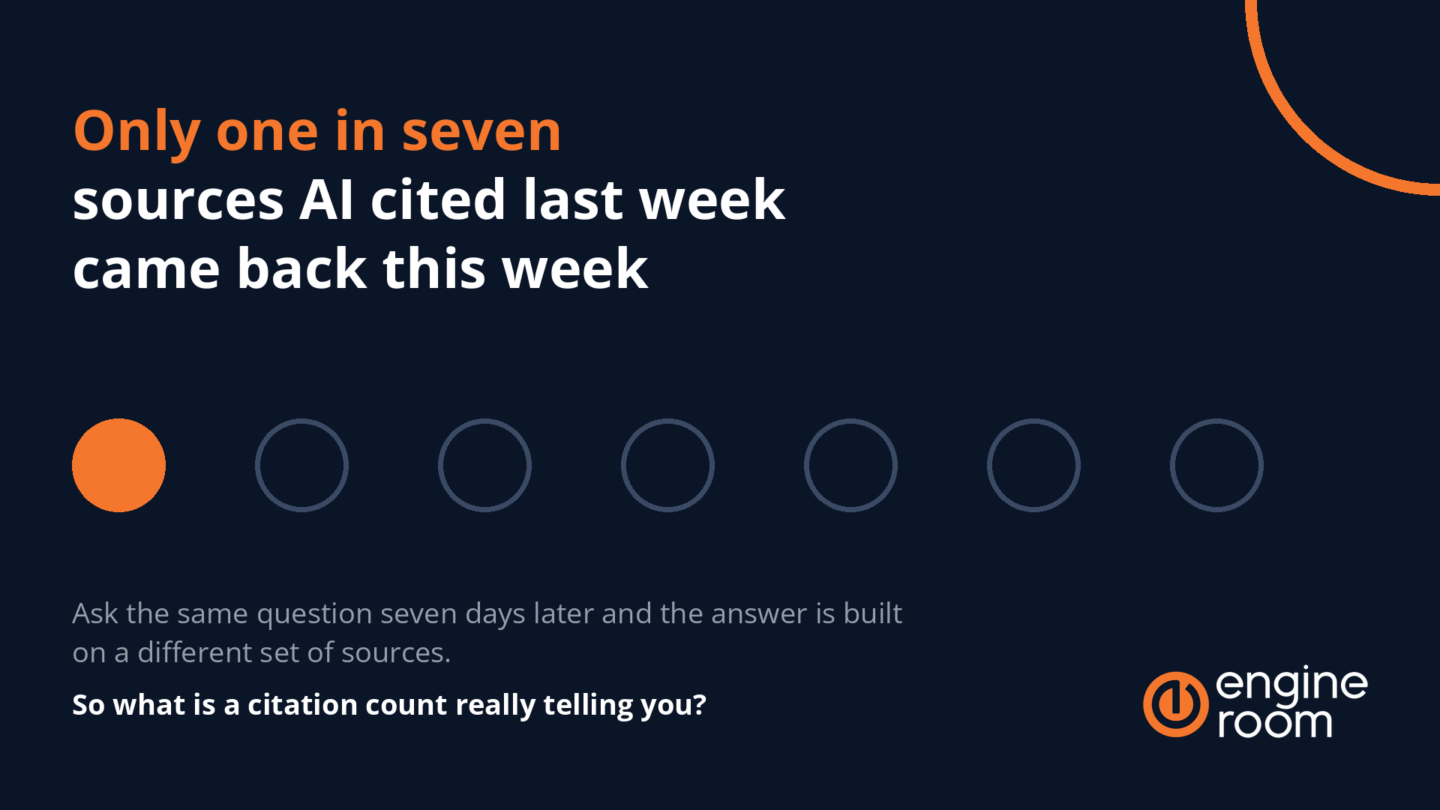
 

Image by Ewan from Pixabay


Related stories.

Don’t be distracted by the citations noise

A recent study by AIVO says citations are noise. Run the same prompts three times, and it reports that the cited sources change 95.8% of the time. They then go on to identify that the brand recommended (after multiple follow-up questions) changes only 14.6% of the time. The implication is that brands measuring how they […]

Do you know which pages on your website AI assistants actually rely on?

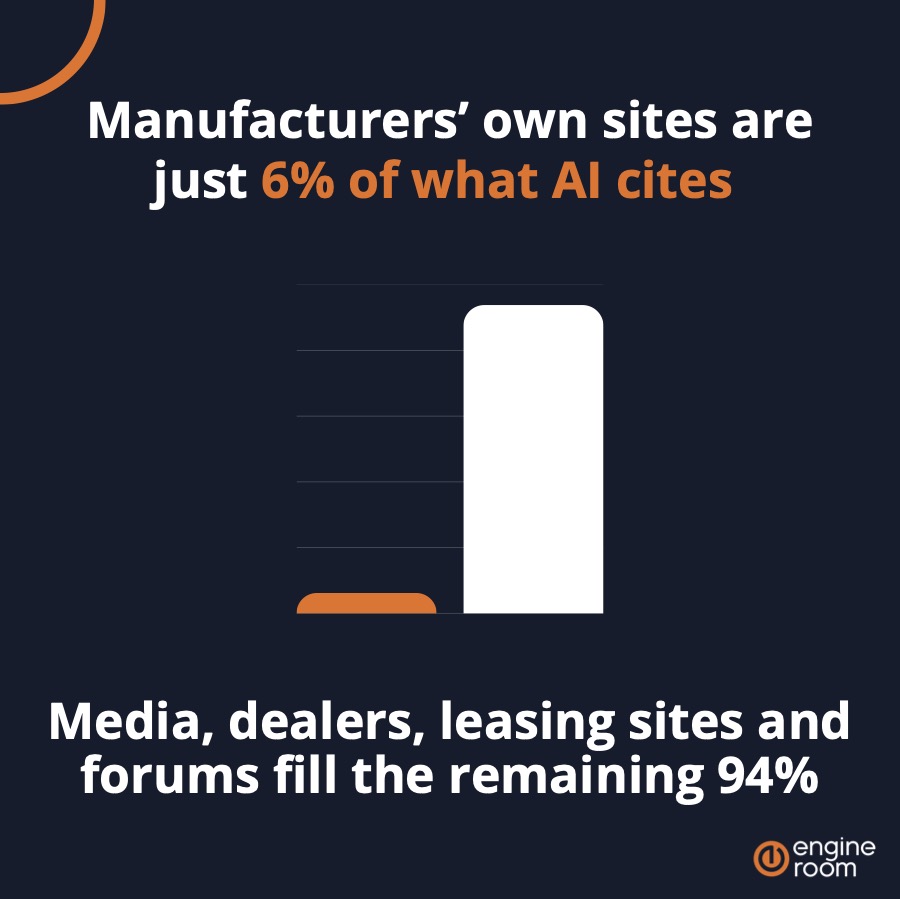
Most brands don’t. We looked at 62k AI answers to car-buying questions across ChatGPT, Gemini, Perplexity and Google AI Overview in the last three months. A few things stood out: • Manufacturers’ own sites are just 6.2% of what AI cites. Media, dealers, leasing sites and forums make up the rest. • Within that small […]

Authenticity is king on social, but agility will be crucial as big changes loom

When you think of influencer brand collaborations, you probably think of Instagram, right? Take it back to the noughties, when bloggers were busy building followings and communities around fashion, food, lifestyle and more. Brands quickly took note of their unique, authentic voices and the relationships they had built with their audiences – offering an alternative […]

Is Reddit worth the effort for AI visibility?

Reddit is the only forum that really registers (72% of forum citations over the last month) for AI tools, but it’s still a small slice: only about 6% of AI answers cite it. So, what pulls it in? Three question themes lead: practicality, reliability and electric. Together, they account for 37% of all Reddit citations. […]

Clubs risk driving away fans through underinvestment in their stadium experience

Ten years ago, our Future of the Sports Fan report highlighted how fans had increasingly high expectations of the live sporting experience. Today, Arsenal’s plans to modernise the Emirates Stadium shows just how seriously some clubs are taking that challenge a decade on. Despite being only 20 years old, the stadium is set for upgrades […]

How Automotive Awards Are Shaping AI Visibility

According to Engine Room, the RAC editorial pages are the fifth-most cited domain in AI search with the likes of ChatGPT, Gemini, Google AIO and Perplexity behind CarWow, What Car?, Auto Express and YouTube. This year saw the launch of the RAC New Car Awards. So how did this impact its AI visibility? RAC announced […]

AI Search Is the New Top of the Funnel for Automotive Brands

AI search is now the top of the funnel for car sales. Rather than a page of links and magazines off the shelves, car buyers are asking ChatGPT. And those clicking through from AI are four times more likely to convert. It means understanding how you’re appearing on AI platforms, such as ChatGPT, Perplexity, Gemini and […]

What Makes AI Recommend One Car Brand Over Another?

We know that online search is changing as car buyers switch to AI over traditional search engines when researching their next vehicle. So what makes ChatGPT and other LLMs surface one car brand over another? The answer starts with consistency. A consistent brand voice across every digital touchpoint – your own digital content, social media channels […]

Be Bold.

It’s time to come off the fence:


Message us