






 Performance Communications | سبتمبر 23, 2015
Here at Performance Towers, there have been ongoing discussions for several months (normally over a pint at the pub to be totally honest) on what constitutes a sport. This week, the same discussion is being had at the Royal Courts of Justice as they decide whether Sport England was right to deem that Bridge is not a sport.
There are very clear factions here at Performance on what encompasses a ‘sport’. Using sporting parlance, one ‘team’ believes that the only true sports are ones that require an advanced level of physical exertion – basically if you’re not sweating through physical effort, then there’s no way you can class it as a sport.
The other ‘team’ – a group of perhaps not so physically fit specimens – will argue that sport has to include more than just physical effort. Strategy, team-work and skill can all be part of sports.
Sport England uses the Council of Europe’s European sports charter 1993 definition of sport, which is an “activity aimed at improving physical fitness and well-being, forming social relations and gaining results in competition”.
Yet, their own list of sports they support include model aircraft flying and skipping. Excuse my ignorance but I would love to see a study that shows that model aircraft flying improves physical fitness. Alternatively has anyone ever been to a skipping competition?
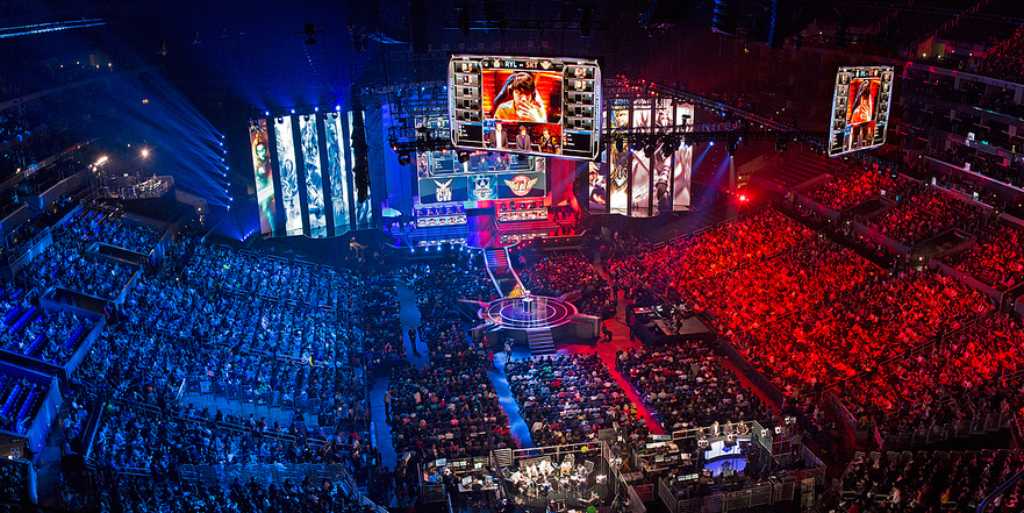
What started the discussions at Performance wasn’t Bridge but was rather the growth of the e-Sports industry. If you’ve not come across e-Sports (or electronic sports) yet, this report from the World Championships in Seoul last year gives you an insight into this world.
OK, you may think it’s just people playing videogames so why is this a sport? Aside from the multi-million pound competitions, corporate sponsors and full (Olympic) stadiums, it does reflect the Council of Europe’s European sport charter definition of sport.
The top professional players are incredibly fit and it has been proven that players have faster reaction times than the general population. It is also a social sport in that anyone can participate (maybe not at top level but that doesn’t stop the friendly football kick-about in the park at the weekend!).
Interestingly, other sporting bodies are recognising the importance of e-Sports: in 2013, the International e-Sports Federation (IeSF) became an official signatory of World Anti-Doping Agency (WADA) and earlier this year it joined the IAAF’s “Athletics for a Better World” campaign.
As part of that partnership, Athletics for a Better World will develop training plans and fitness programmes to help professional and recreational gamers alike perform at the highest levels. The Deputy General Secretary of the IAAF said at the time: “E-Sports is one of the fastest growing sports in the world and we’re delighted to become the first governing body to partner with the IeSF.”
My emphasis added to his words there but the point is that the IAAF, which has more than 100 years’ experience as a sports governing body called e-Sports a sport. So although we may still argue over whether a sport is a sport, to rip off the old phrase about ducks: if it looks like a sport, runs like a sport, and has passionate fans like any other sport, then surely it is a sport?