





 Performance Communications | أكتوبر 5, 2017
Politics and sport have long been bed fellows, but often uncomfortably so.
Cast your mind back – or Google it, as I did – and history is punctuated by athletes, teams, fans and entire nations using sport to take a political stance for the causes in which they believe.
Needless to say, sporting individuals who speak up are often greeted with such sentiment as: “Who are they to say that”, “What do they know”, or simply, “Pipe down!”.
Harsh but, as some might argue, fair in the majority of cases.
However, this is an era in which we have never been more informed than we are now. Couple this with the advent of 24 hour news, the internet and social media, and it has seen sports stars placed on pedestals of an ever-increasing height. This advent of extreme populism means they now find themselves in a position of great influence and, dare I say it, awareness.
In America, this has been particularly intensified by the huge influx of wealth and subsequent personal fortune for its biggest sporting names. As spokespeople for themselves, their teams and their sponsors, they have a privileged position of influence over the thinking of their fans, and are paid handsomely for that fact.
With an ever more tumultuous domestic and international news agenda and a sprinkling of ego, this makes for a scenario in which certain modern-day sports men and women feel empowered enough to speak out on the subjects they feel most passionate about.
Case in point – the latest foray by sports stars into the political arena with the recent peaceful protests in the NFL. Started by former San Francisco Quarterback Colin Kaepernick, who knelt during the pre-game playing of the national anthem last year in response to alleged mistreatment of black people and their communities by police, it has since gathered pace with the new season.
Drawing presidential attention and, unsurprisingly, scorn, this has boiled over into a war of words between Donald Trump and some of his nation’s most marketable stars – namely basketball’s LeBron James, Steph Curry and a series of NFL owners and their players.
Race is a polarising issue in America, as it is in so many places, and many will support the stance these players are taking. There are plenty though that do not see this as an issue of colour or creed, instead a gesture built on disrespect for the nation and its flag.
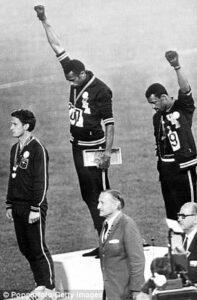
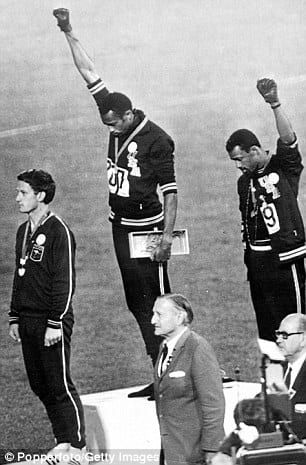
Such political statements by sports stars are nothing new though – the success of Jesse Owens in the 1936 Olympic Games in Nazi Germany was a stark statement against a harsh and oppressive backdrop; while the enduring image of Tommy Smith and John Carlos atop the 1968 Olympic podium in Mexico City with their arms raised in salute to the Black Power movement, is another that has echoed through history.
However, it begs the questions: why do we listen or pay attention to the actions of sports people, when there are potentially more qualified people to speak and act on our behalf?
Well, digging back into our Future of the Sports Fan research in which we spoke to academics, rights holders and global sponsors about where sporting fandom is heading, we found that 66 per cent of people see athletes as role models for society, while 64 per cent believe that sport is more likely to inspire positive change than religion or politics.
Couple that with the fact that 94 per cent of people admit to watching live sport, and you have a very potent mix, in which it is no surprise that our sports stars feel they have a platform upon which to speak out and affect social change.
Time will tell as to what the outcome will be when the dust settles on this latest round of player power on the American political stage. It has certainly stimulated widespread debate and, as such, shone a light on an issue that is close to so many people’s experience around the world – athlete or otherwise.
One hopes that the dialogue this has stimulated will bring about positive change, but also, that sports stars continue to use their privileged position for the good of us all.
Who knows, in this politically charged environment in which society has become increasingly polarised and minority groups are crying out for purposeful representation and subsequent change, there is enough evidence to suggest that the next mass participation political movement could be led, or at least influenced, by a sports star.
Worrying? Perhaps.
Exciting? Depends on your point of view.
Worth a shot? Absolutely.
Nick