





 Performance Communications | فبراير 12, 2020
Confession time… last month I got a parking ticket. Okay, not a groundbreaking confession, but it was annoying and expensive. And for me is an example of one of the few annoyances of riding a motorcycle – the inconsistent rules regarding bikes, and specifically, motorcycle parking.
Since passing my motorcycle test, there have been very few days that I haven’t ridden somewhere. I’m a proud, some would say, fanatical convert to two wheels. I always look for an excuse to use my bike rather than public transport or a car. The ease and predictability of timings to get around short and long distances make my life easier. There’s one smear on the visor though, and that’s road rules. Specifically in London.
Riding in and around our capital can be a joy. Famous sights and landmarks open up in front of you as you cruise around, smugly filtering through traffic jams. But London is divided into different councils. And each council has different rules.
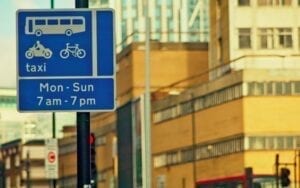 For instance, in some parts of London, motorcycles are allowed to use bus lanes. But cross an unmarked council boundary and you can expect to receive a fine for something you could legally do 10 metres previously.
And the only way to know is to look for the little signs at the start of the lane. On top of that, at left-hand junctions, the bus lane stops to allow cars to turn left, but frequently cars aren’t expecting a motorcycle to be there, meaning bikers also have to be extra vigilant for left-turning traffic.
It’s just one more thing a biker has to pay attention to rather than focus on the road. And the inconsistency means car drivers aren’t looking for the danger.
Another challenge is the inconsistent approach to motorcycle parking. Each council has its own rules on where bikes can park and if/how much they pay to do so. Some councils have parking bays for bikes. Some you are expected to pay the same as cars. Some you can pay £1 for the day. Some you can park anywhere, including resident bays, except parking spaces for cars! All of which means that trips to new parts of London on the bike are preceded by a good amount of research to find parking rules for the area in which I plan to park. That starts with trying to find which council you are going to, and then researching their rules, and then trying to find their parking, and finally adding that to your own map.
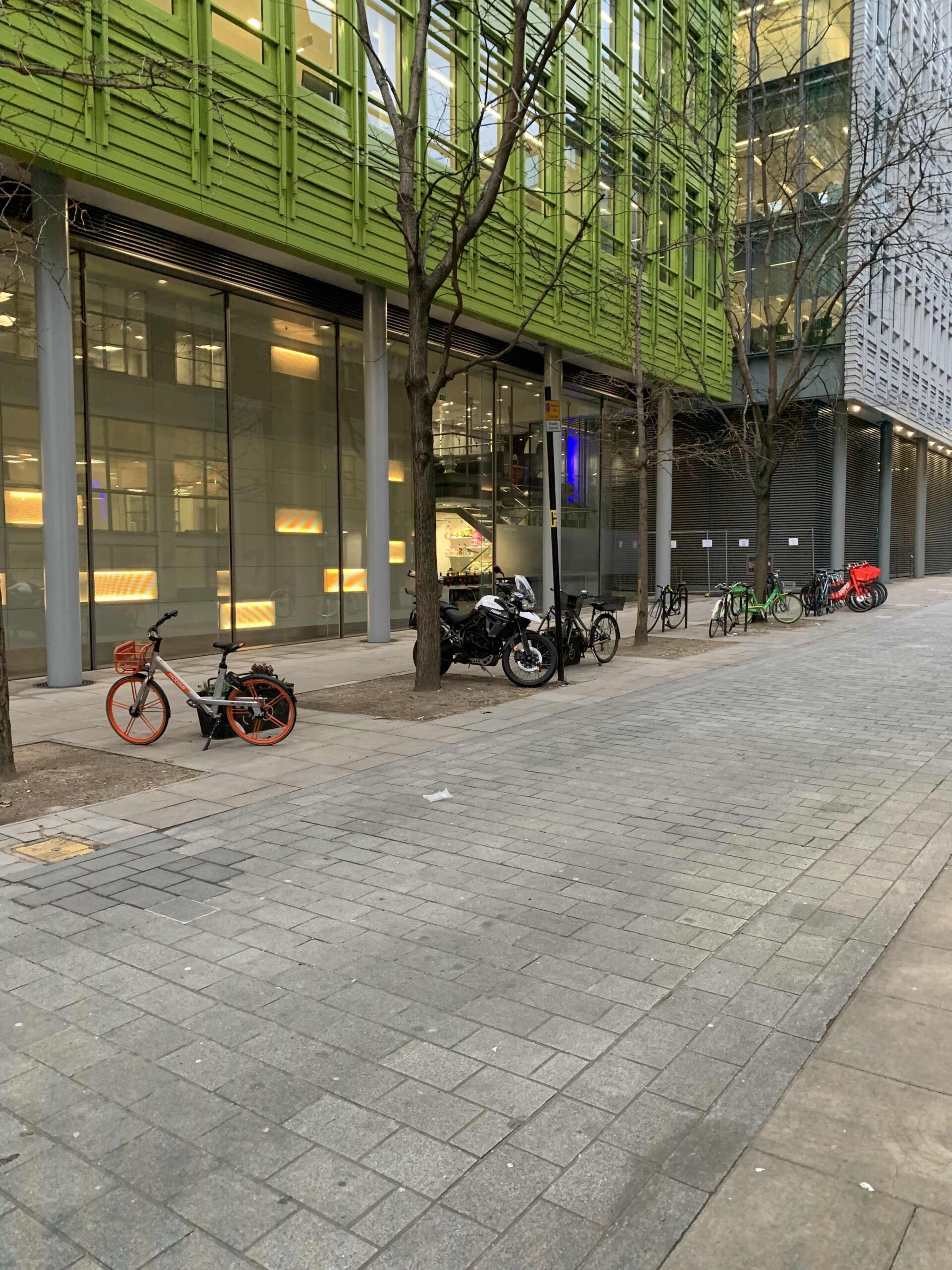 Last month I got it completely wrong. Heading for a meeting in central London, I wrongly assumed my destination was in Westminster. I plotted a route to a motorcycle bay and paid my £1 for a day of parking. When I got there, however, building work meant the bay was inaccessible. Trying to reroute on the fly, in heavy traffic and with unfamiliar junctions and priorities was stressful. Your best bet in such circumstances is to pull over and try to find a new bay (not easy because you have to repeat the above process and there is no single map of motorcycle bays). I managed to navigate to my final destination before finding a back street with wide pavements and parking for bicycles. I reasoned that, as I was off the road, not obstructing pedestrians or other bicycles parking, that I should be fine. Plus I’d paid my parking fee, so I hoped they would think I was a responsible biker.
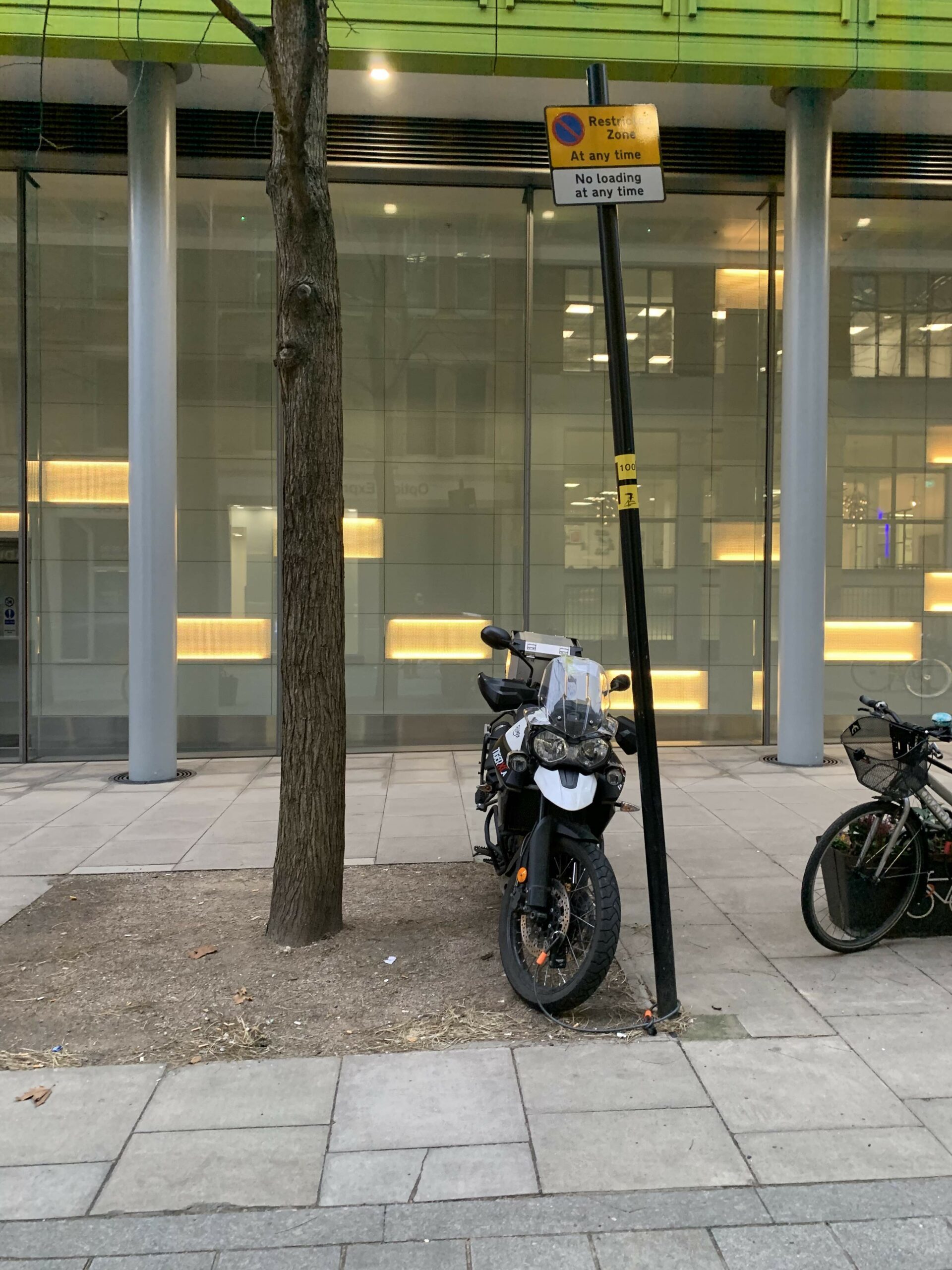 As you may have guessed… I was wrong. Not only had I switched to a different council in the 200m I’d ridden from the original parking bay, meaning my attempt to adhere to the rules was pointless, but also in Camden (and I suspect other councils) my bike’s wheels needed to be on the road. I almost fought the decision on the grounds that my wheels were on the dirt area for the tree and not the pavement, but decided it wasn’t worth the effort.
The parking ticket is my own fault really. I can’t really complain. But what this highlights for me, is a lack of consistency in the approach to Powered Two-Wheelers (PTW). The MCIA pushes its Ride to Work Week each year, and it’s an important campaign. If just 10% of single-occupancy car drivers switched to PTWs, then congestion would be reduced by 40% for all road users. Grow that to 25% and congestion would be eliminated altogether. In order to do that though, this patchwork quilt of rules and regulations needs to be ironed out, from parking to road rules. A consistent approach to the rules would make it easier for PTW riders to use their bikes legally in all cities, helping ease congestion and improve air quality. A side benefit is that it would also save my wallet!