




PO Box 502058 Office 1905, Aurora Tower, Dubai Media City Dubai U.A.E
+971 (0) 4551 5472

Website version

Car buying and ownership habits in the Middle East – are they changing?

Performance Communications Author Image Performance Communications | مايو 7, 2020

InstaShop, Careem, Deliveroo – all household names in Dubai that have only popped up in recent years, yet seem to have become somewhat essential technology for our daily lives. You can get all your grocery shopping delivered to your house via InstaShop while you are in your Careem on the way to work after ordering lunch to the office through Deliveroo. Five years ago it would have sounded rather extreme I know, but today it is the reality. I mean, we get fuel delivered to us now through Cafu, so why should purchasing cars be any different?

Buying a car has tended to be a lengthy process. You have the research, then the multiple visits to multiple showrooms, the test drives, negotiating prices and financing, not to forget the bank visits. All this is changing, especially with the generational shift. By 2025, 75 percent of the global workforce will be millennials, the kings and queens of on-demand services. A shift is happening in car buying and it has been slowly happening for a while.

The first to take on the idea of online car buying was Tesla – you can select your Tesla, choose the specs, and pay your deposit all online. Al Ghandi Auto, an official dealer for General Motors in the UAE, has recognized this change and has adapted to selling cars online. You can now select your car, spec it, pay for, and have it delivered straight to your doorstep.

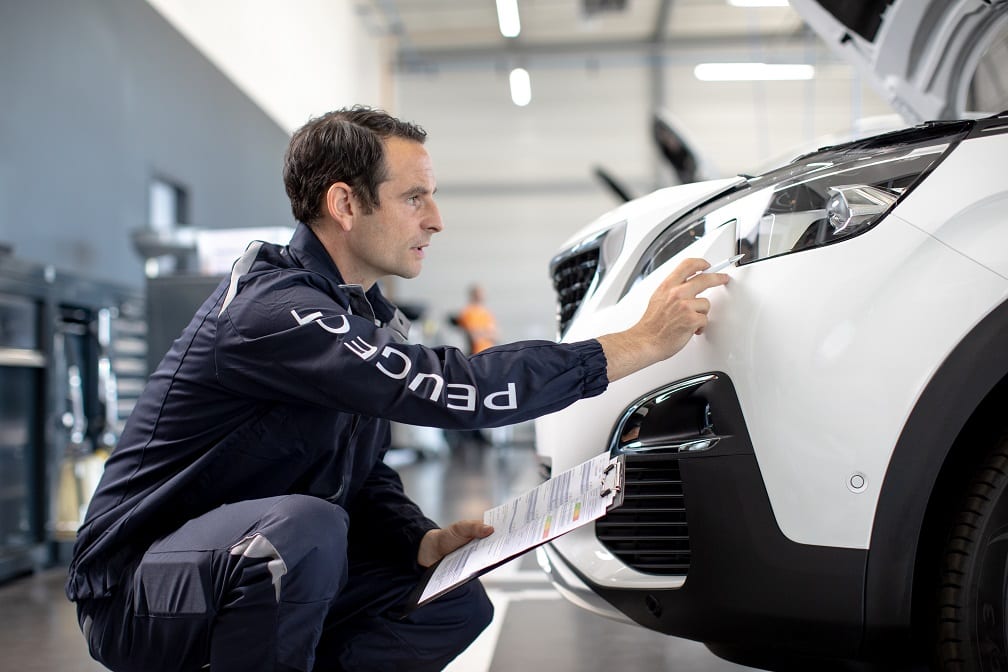
In many GCC countries, Peugeot is now also offering a new service by providing valet test drives for potential customers looking to buy a new car, or valet aftersales servicing for existing customers, in order to keep them out of showrooms. Customers do not need slick salesmen anymore; many of them know more about the car they are interested in before even entering the showroom, thanks to the many car buyer guides.
The willingness to buy cars online rather than at physical dealerships is there, it just needs to be enabled and companies need to provide this service in a safe and easy manner. My mother had always been against buying her groceries online. But given the recent world events, her mindset has been completely changed and she has embraced online grocery shopping. The same may happen with car buyers. This trend has been accelerated by recent world events, especially the COVID-19 pandemic, and it is now up to companies to make it an easy and enjoyable process.


Related stories.

TO CHARGE FOR FEATURES, OR NOT TO CHARGE? THAT IS THE QUESTION FOR SOFTWARE DEFINED VEHICLES

I enjoyed my first visit to FT Future of the Car summit last month, and it got me thinking. While Software Defined Vehicles (SDVs) and connected cars were a hot topic, communicating the benefits of these vehicles to consumers isn’t necessarily straightforward. It’s especially hard when it feels like new tech is simply the enabler […]

PARTNERSHIPS, PARTNERSHIPS, PARTNERSHIPS

Sam Mercer noticed a running theme at the FT Future of the Car Summit as the complexity and cost of producing modern cars is pushing more and more companies to work together. “Protectionism doesn’t work”. That was the clear statement from one panellist at FT Future of the Car last week. And this sentiment truly […]

Breaking Barriers

It’s not often you stop and stand in awe of sporting achievement, but Sunday morning’s London Marathon stopped me in my tracks. The sub two-hour barrier for a marathon was never meant to be beaten in competition across 26.2 miles. While Red Bull and INEOS’ 2019 event showed it could be done in controlled conditions, […]

2026 is make-or-break for self-driving cars in the UK

We all know that driverless cars are no longer the stuff of science fiction. While both China and the US have embraced autonomous technology, Aisling Fitzgerald looks at why 2026 promises to be a big year for self-driving vehicles here in the UK… This year is set to be a turning point for autonomous mobility […]

Do e-axles hold the key to the EV transition? Why EV powertrains are going all-in-one

While battery technology typically takes the role of frontman in the rock band that is the EV transition, Matthew Kirtley looks at another member of the group that could be about to take centre stage… According to a recent report from Automotive IQ, the total value of EV powertrains produced worldwide is projected to more than […]

The law of unintended consequences: The new per-mile EV tax in detail

It has been more than a week since the later-than-usual Autumn Budget, and we think the new proposals could have an unintended consequence that will bring an age-old challenge for the auto industry back in the spotlight. The 2025 Autumn Budget has introduced a new per-mile road tax for battery EVs and plug-in hybrid EVs. […]

5 key takeaways from the IAA Mobility show

We were on the ground at the IAA Mobility show earlier this week, and what a show it was. The European motorshow is back with a bang. Here are my five key take-aways: Rise of the small EV: Favourable market conditions and demand for low-cost EVs, lead to an abundance of great-looking all-electric hatchbacks. VW’s […]

Nuclear’s Role in the EV transition

It’s no secret that mass adoption of BEVs and PHEVs depends on access to reliable charging infrastructure, but an under-appreciated aspect of the EV revolution is how much it depends on affordable electricity. Here, Performance Communications’ own Matthew Kirtley explores how nuclear might be the missing piece of the jigsaw. Rolls-Royce has recently claimed that […]

Be Bold.

It’s time to come off the fence:


Message us